18. Dorset Gardens Condo: Understanding the 99-Year Leasehold Plan
When a new condo is branded as Dorset Gardens, it is tempting to treat it like a finished product, as if the important decisions have already been made. In reality, what matters most at this stage is not just the site, but the structure behind the project: the lease term, the scale of the development, and the people who won and develop the land.
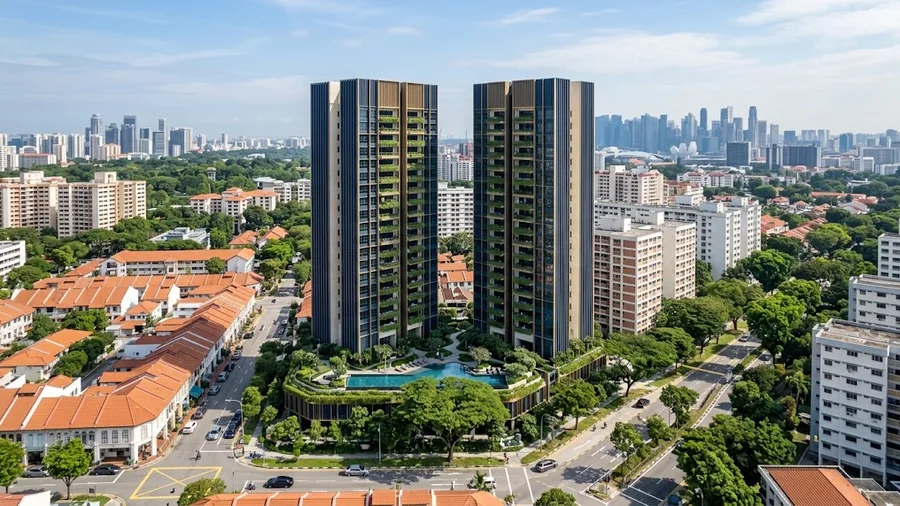
From the information available, Dorset Gardens is being marketed as an upcoming condominium project on Dorset Road in Singapore’s District 8, near Farrer Park MRT. It is tied to a government land sale site at Dorset Road, where a bid was awarded in October 2025. The development is described as a 99-year leasehold condominium, planned with about 428 homes across two 27-storey towers. The land was won by a consortium involving UOL, Singapore Land Group (SingLand), and Kheng Leong Company. One published statement indicates a JV split of UOL 60%, SingLand 20%, and Kheng Leong 20%.
That is the factual base. The rest is where buyers tend to feel uncertainty: how a 99-year leasehold plan affects lifetime ownership, resale thinking, and monthly finances. If you are evaluating Dorset Gardens new launch or considering whether it makes sense as a home or an investment, the lease is the first lever you should understand.
What “99-year leasehold” really means for your planning
A leasehold condo usually gets discussed as a headline number, “99 years,” but you will make better decisions if you translate it into everyday consequences. The key point in your planning is this: you are not buying a perpetual title. Instead, your future ownership is time-bound. That time horizon then influences:
1) how you should think about holding period
2) how lenders and buyers might view value over time 3) how you approach upgrades and renovation decisions for a home you expect to live with through different phasesAt this stage, the lease term is stated as 99 years. What is not stated in the available information is the lease commencement year and any specific information on how the remaining lease will be framed at sale. In practice, the exact “how many years left” figure at the time you buy can move due to timing, approvals, and the way official documents calculate it. So, while the headline is clear, you should still expect that the actual remaining lease details will be confirmed in the project’s formal materials.
Here is a practical way many buyers handle that uncertainty. If you are planning to treat the unit as a long-term family home, a 99-year lease can still work, but you want a realistic holding timeline. If you are more concerned about flexibility, you should also plan for how a future buyer will evaluate the remaining lease when you sell.
A simple reality check: the unit you buy today will be sold later. Whatever the brochure says, the resale conversation will almost always come back to the lease timeline, along with the property’s physical condition, the broader market, and demand for that specific location and unit layout.
The development scale: “about 428 homes” across two 27-storey towers
The project is described as having about 428 homes split between two 27-storey towers. Even when “about” is used, the scale still gives you a feel for the kind of living environment the project will create.
At this kind of size, the building communities tend to be dense enough that common facilities and management quality matter. You will also want to think about how tower placement can affect daily life, even if you do not know the exact stack layouts yet. Factors like lift experience, morning traffic at the drop-off area, and how often you might use the same set of shared amenities tend to become more pronounced in bigger projects.
Two 27-storey towers also usually mean that unit mix and view corridors become critical. In mid-to-high rise developments, minor differences in floor level can translate to very noticeable changes in daylighting and skyline views. That is why buyers often look for a Dorset Gardens view showflat opportunity (or at least request view-related guidance) once showflat viewing opens. You are not only checking finishes. You are testing how the space “feels” in real light and real proportions.
Because the information available here does not include unit size mix, stack plan, or exact tower pairing to corridor orientation, it would be a mistake to over-interpret. But the “two towers, about 428 homes” scale is enough to tell you that this will not be a boutique environment, and that matters for both lifestyle fit and long-term resale appeal.
Location logic: Dorset Road, District 8, near Farrer Park MRT
Dorset Gardens is positioned on Dorset Road in District 8, near Farrer Park MRT. Even without getting into hyper-specific commuting claims, this location framing tells you something: you are buying into a mature district with established infrastructure rather than a brand-new industrial growth node.
In property terms, “near MRT” is a broad advantage, but what typically differentiates projects is how walkable the immediate area feels and how the daily amenities support different lifestyles. https://dorsetsgarden.com.sg/ The available information also notes proximity to schools such as St Joseph’s Institution. For families, school access is often not a single metric but a set of trade-offs, like how much morning time gets shaved off and how stable that convenience is over years.
The best way to use location data during an early evaluation is to compare what you want from daily life to what the area already supports. If you are a working professional, you will care about transit reliability and access routes. If you have children now or are planning for them, you will care about school walking routes, transportation patterns, and how that affects routine.
It is also worth noting that the verified information describes the site as roughly 10,399 sq m and adjacent to Farrer Park MRT. That scale and adjacency suggest a site integrated into an existing neighborhood fabric rather than an isolated plot.
Who is behind Dorset Gardens: the consortium matters
New buyers sometimes assume the marketing name is the same thing as the developer behind the project. With Dorset Gardens, you have at least some grounded context: the land sale site at Dorset Road was won by a consortium of UOL, SingLand, and Kheng Leong Company, with one available statement indicating UOL 60%, SingLand 20%, and Kheng Leong 20%.
Why this matters when you are assessing a Dorset Gardens condo or Dorset Gardens new launch is not because brand names guarantee outcome. It is because development governance, construction discipline, and finishing standards tend to be influenced by established groups with track records. The consortium structure can also influence how resources are allocated and how project execution risks are managed.
One caution: there is mention that UOL’s annual reporting indicates acquisition of a residential site at Dorset Road in January 2026 via a joint venture involving Kheng Leong and CapitaLand Group. However, the context around that acquisition appears separate or later relative to the Dorset Gardens branding used by other property pages, so it should be treated cautiously against the specific Dorset Gardens project details and branding presented elsewhere.
In other words, do not merge every “Dorset Road” reference into one certainty. Keep your evaluation anchored to the confirmed Dorset Gardens project details that explicitly describe the leasehold term, the towers, and the marketing project identity, rather than assuming all Dorset Road activity in public reports maps cleanly to the same launch.
The land sale bid price and what it implies, without overreaching
The available information includes a bid awarded in October 2025 for S$524.3 million, described as equivalent to S$1,338 per square foot per plot ratio (psf ppr). Those numbers matter because they help explain market expectations and potential pricing pressure. When land cost is high, developers often need pricing that can absorb the cost structure, construction costs, and timelines.
But you should resist the temptation to convert those figures into a guaranteed “fair price” for the eventual unit. In real launches, price schedules are shaped by more than land cost, including unit mix, expected market demand, interest rate environment, and competitive launches. Also, the ppr-based figure is not the same as a direct unit cost you can calculate into your purchase price without the full official project parameters.
Still, the bid figure gives you a useful reference point for conversations when you attend a Dorset Gardens book appointment or when you ask for a price list. If you know the land cost environment that preceded the launch, you can ask sharper questions about the rationale of the Dorset Gardens pricing approach.
What to expect from early marketing materials: brochure, price list, showflat
The available information suggests that marketing pages for Dorset Gardens or Dorset Road related launches offer brochure downloads, price list registration, and showflat appointment booking. That is consistent with how many projects stage their sales funnel: public pages capture intent, and the buyer is guided to request official materials or schedule a viewing.
However, within the verified context reviewed here, there is no reliable official developer brochure or a confirmed, complete pricing schedule that can be treated as final. There are references to “direct developer price,” “price list,” and launch-preview registration, but those are marketing references, not confirmed pricing commitments you can build a financial plan on.
So, how do you handle this as a serious buyer?
First, treat any early “pricing mention” as indicative until you see the official price list and conditions. Second, confirm what unit category the price is attached to, because in multi-tower developments, even similar-looking units can vary widely in stack, floor level, and view exposure. Third, ask what the price list covers and what it excludes, especially if you plan to compare between projects.
Even if you do not have the exact numbers yet, the process matters. Your goal is to arrive at a purchase decision with enough verified information that you can compare apples to apples.
How to evaluate leasehold value in a resale-focused way
Leasehold properties can still sell well, but resale outcomes hinge on a few practical realities that show up in buyer psychology and bank assessments. Since Dorset Gardens is described as 99-year leasehold, the question is not whether you can buy. The question is how you position yourself for the future.
Without pretending you can forecast the market, you can still evaluate your resilience:
- If you expect to sell within a shorter window, your unit’s resale strength will depend heavily on lease remaining at that future time, plus overall market conditions.
- If you expect a longer hold, your decision can be more lifestyle-driven, but you still want to be comfortable that lease considerations will not become a “surprise expense” later.
- If you expect to rent out, you should be realistic about how lease length can influence the pool of tenants and the pricing power you have.
A useful mindset I have seen work for buyers is to treat leasehold as a factor in your financial risk management, not as an isolated checkbox. You do not need to panic. You do need to know what lever you still control. The holding period is the most obvious lever. Another lever is unit selection. A layout that stays functional and desirable tends to have an easier resale conversation, even as buyers become more lease-conscious.
The trade-offs you should ask about before choosing a unit
At showflat or during brochure review, buyers often focus on what looks good: finishes, space feel, and how the light lands on the living room. Those are valid. But for a 99-year leasehold plan, you also want to ask questions that connect the unit’s characteristics to long-term desirability.
In particular, since the available verified information does not confirm stack-level details, your diligence should be about confirming official unit specs once documents are released. You can also ask how the development will handle common facility access and how management is expected to be structured.
In a dense two-tower development, the wrong assumptions can cost you comfort day after day. The “right” assumptions usually come from seeing the unit in person and verifying what you are buying in documents.
If you are uncertain, one approach is to bring a short list of what matters most and request that the sales team address them directly with the official materials in hand. You are not trying to win an argument. You are trying to prevent a mismatch between expectations and the actual product.
Here is a practical five-item checklist you can use during Dorset Gardens view showflat visits or during your Dorset Gardens book appointment:
- Confirm the lease term presentation in the official materials, and ask how it is calculated for the specific unit
- Verify tower, floor level, and stack information for the unit you are considering
- Request the price list details for that exact unit category, including any stated inclusions and conditions
- Ask about the availability and expected timing of any supporting documents tied to sale and completion
- Walk the common areas and observe crowd flow patterns, especially at entrance and lift lobbies
Pricing expectations: what you can and cannot infer right now
The verified context indicates there are marketing pages referencing a “direct developer price” and “price list” registration, but there is no confirmed final pricing schedule in the information available here. That means you should not pretend you know the exact Dorset Gardens pricing.
What you can do is prepare your negotiation and decision framework without guessing numbers.
If you are comparing projects, focus on the total package: leasehold term, unit attributes, location convenience, and the relative scale of the development. Then, when the official price list is released through the proper channels, you can run the numbers quickly.
Also, do not ignore your financing structure. With leasehold, buyers often become very focused on approval certainty and cashflow comfort. You may want to ensure you can handle stamp duty, upfront costs, and any initial maintenance outlay without stretching beyond what you can sustain.
Since the verified context does not include specific financing terms for Dorset Gardens, the only responsible advice is to treat your financial plan as a personal calculation rather than a marketing projection. If the numbers are attractive, great. If not, at least you made the decision with clarity.
Dorset Gardens project details: what is confirmed, and what should be verified
Based on the verified context available, these are the core confirmed anchors you can rely on while evaluating Dorset Gardens project details:
- It is marketed as a condominium project on Dorset Road in District 8, near Farrer Park MRT
- It is planned as a 99-year leasehold condominium
- It is described as having about 428 homes across two 27-storey towers
- The land bid was awarded in October 2025 for S$524.3 million, described as S$1,338 psf ppr
- The consortium includes UOL, SingLand, and Kheng Leong Company, with one stated JV split of UOL 60%, SingLand 20%, Kheng Leong 20%
- The site is described as roughly 10,399 sq m, next to Farrer Park MRT and near schools such as St Joseph’s Institution
What is not confirmed in the verified context is any complete official brochure content and a finalized confirmed pricing schedule. That gap is not unusual during early marketing phases, but it affects how confidently you can plan.
If you are serious, your next step is straightforward: request the Dorset Gardens brochure and the price list through the proper registration channels, and then evaluate unit-specific details using the official documents.
How I would approach a decision if I were shopping for this leasehold condo now
Let me frame this in a way that reflects the reality of property decisions rather than ideal scenarios.
If you are considering Dorset Gardens new condo as your home, you likely care about daily life more than speculative lease math. Your decision then becomes a question of fit: Does the area support your routine? Do the unit dimensions and layout work for your lifestyle? Can you see yourself living with this building’s scale and shared facility setup?
If you are considering it for investment, leasehold becomes a more central part of your evaluation. You would care about how the development’s apartment profile will be positioned by future buyers. A 99-year leasehold does not automatically kill an investment. It just means you should be deliberate about holding period and exit planning.
In both cases, the most frustrating situation is buying based on assumptions because the pricing and official documents arrive later. The best approach is to treat the official materials as the source of truth. Use marketing pages to learn the framework, but use the brochure and price list when you start making numbers-based commitments.
Final thoughts to keep your evaluation grounded
Dorset Gardens is a project with clear headline parameters: a Dorset Road address in District 8, near Farrer Park MRT, a 99-year leasehold structure, and a planned scale of about 428 homes across two 27-storey towers. The land sale context is also concrete, including the October 2025 bid award and the consortium behind it.
Where buyers need to slow down is on what is not yet fully confirmed in the verified materials, especially around pricing and official brochure details. Until those are in hand, the smartest posture is curiosity with discipline: explore the showflat, ask unit-specific questions, and only form a final view once you can verify the lease presentation and the exact price list attached to the unit category you want.
If you want to proceed, book your Dorset Gardens view showflat or Dorset Gardens book appointment through the channels that provide the official brochure and price list. Then you can compare like-for-like, and the leasehold conversation becomes a decision you control rather than a surprise you discover later.